
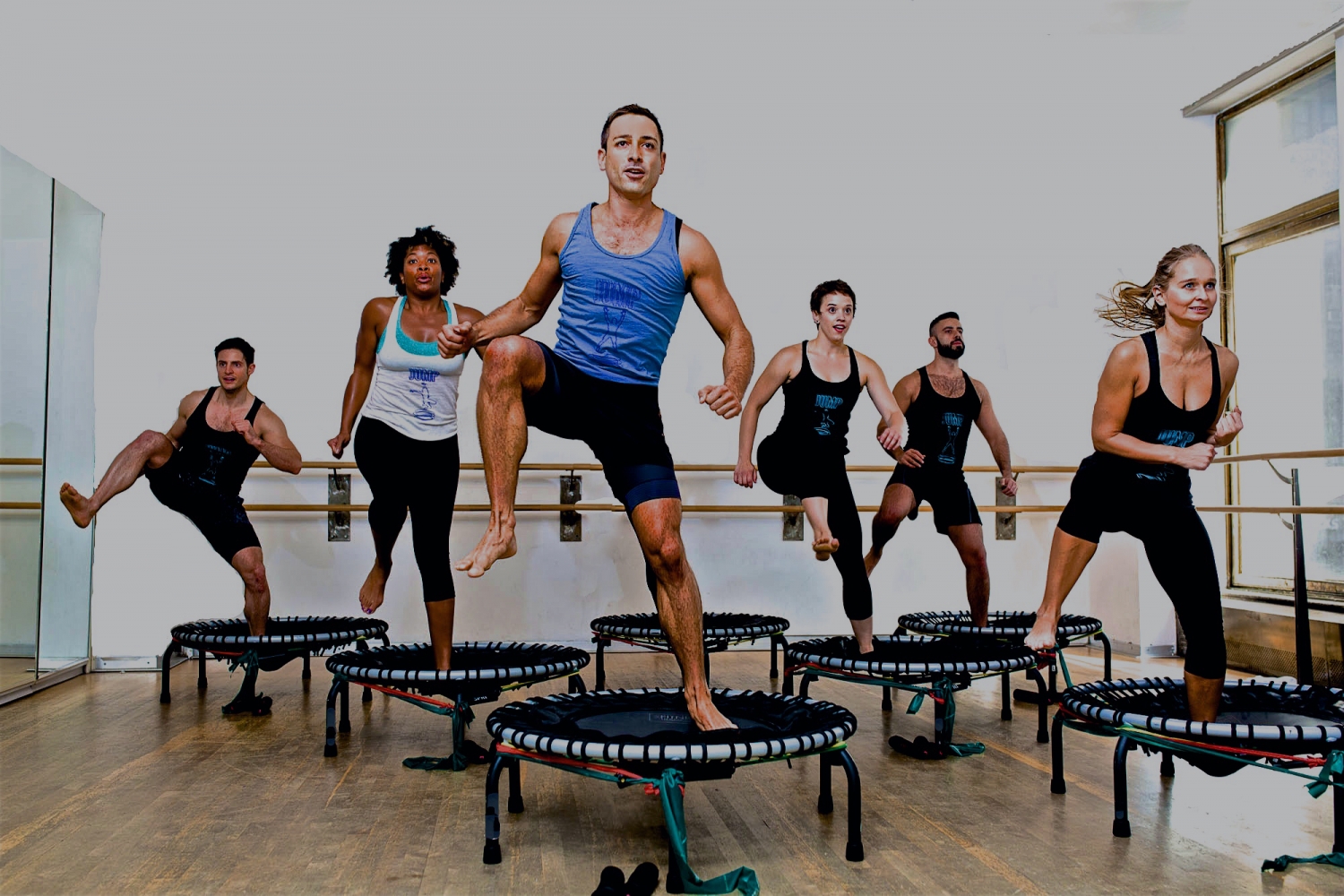

Acceleration attracts attention because it looks powerful. Deceleration is less dramatic but equally important. It is the ability to reduce speed, control direction and arrive in a position that allows the next movement to begin well. In trampoline fitness Singapore sessions, every rebound includes a deceleration task as the participant receives the downward phase and prepares to redirect it.
The compliant mat changes how that task feels compared with a rigid floor. It can reduce the abruptness of contact, but it does not remove the need for muscular control. The ankles, knees, hips and trunk still coordinate repeatedly, often at a musical cadence that allows little time for conscious correction. The value lies in practising controlled transitions, not in assuming that a softer surface makes technique irrelevant.
Deceleration Is More Than Stopping
Stopping suggests that movement ends. In a rebound class, deceleration usually leads directly into another action. The body reduces downward speed, organises pressure through the feet and changes direction as the mat returns energy.
This transition must be timed. If the participant remains rigid, the surface may feel abrupt and difficult to follow. If the body collapses excessively, the return becomes slow and the next movement may start late. Effective deceleration accepts enough movement to manage force while preserving enough structure to redirect it.
The same principle applies during lateral choreography. The participant must control sideways travel before moving back across the mat. A large uncontrolled shift requires an emergency correction, while a measured change of direction keeps the centre of mass within a predictable area.
A Compliant Surface Changes the Force-Time Relationship
Hard and compliant surfaces do not produce identical landings. A trampoline deforms, extending the interaction between body and surface. This can change peak forces, loading rates, joint angles and the timing of muscular work.
A study comparing drop jumps on a mini-trampoline and a noncompliant surface reported lower reaction forces and loading rates on the mini-trampoline. That finding supports the idea that surface compliance changes impact characteristics. It should not be converted into a universal safety guarantee, because class movements, equipment and individual participants differ from a controlled experiment.
Reduced loading rate also does not mean reduced muscular demand. The participant may spend longer controlling the surface and repeat the action hundreds of times. Total training load depends on magnitude, rate, frequency, duration and technique together.
Energy Absorption Is Shared Across the Lower Body
The foot and ankle meet the mat, the knee adjusts, and the hip helps manage the pelvis and trunk. When these regions coordinate, deceleration is distributed. When one area remains unusually stiff or poorly positioned, other regions may make larger corrections.
The trunk deserves particular attention. If it tips or rotates unpredictably, the lower body must decelerate both the rebound and the extra movement of the upper body. Controlled arm action can support rhythm, but large arm patterns introduced before landing control is established may increase the challenge substantially.
No single joint angle suits every participant. The useful outcome is a landing that remains centred and prepares the next repetition without obvious collapse, excessive stiffness or repeated rescue movements.
Rapid Repetition Makes Small Errors Accumulate
A single imperfect contact may have little consequence. A class contains many contacts, which means a small timing error can be repeated until it becomes the dominant movement pattern.
For example, landing slightly behind the centre of mass may cause the participant to pull the arms forward on every rebound. That correction increases energy use and can gradually move the person across the mat. Under fatigue, the correction may become larger.
This is why instructors often simplify choreography rather than merely asking for more effort. A compact vertical pattern can restore the basic deceleration sequence. Once pressure and timing are stable, direction changes and larger ranges can return.
Low-Impact Cardio Still Requires Load Management
The phrase “low impact” is useful when it describes the character of surface contact. It becomes misleading when interpreted as “low demand” or “unlimited volume.” Repeated calf work, knee and hip control, trunk stabilisation and cardiovascular effort can create a substantial session.
Participants new to rebound exercise may feel local fatigue even when they are experienced in cycling or resistance training. Their general fitness does not automatically provide familiarity with the surface timing. Progression should account for skill exposure as well as aerobic capacity.
Increasing class frequency, bounce range and supplementary leg training at the same time makes the source of fatigue difficult to identify. A more controlled plan changes one variable, observes the response and then decides whether another progression is justified.
Deceleration Quality Can Be Observed Without Special Equipment
Participants and instructors can monitor several practical signs. The feet should return to a predictable area. The next rebound should begin without an extra recovery contact. Direction changes should not require the arms to rescue balance. Breathing can rise while the landing remains organised.
Sound may provide some context, but a quiet landing is not automatically a good landing on every surface. The mat and footwear affect noise. Position and repeatability are more useful indicators.
Another sign is how quickly technique returns after a demanding interval. If a short reduction in range restores control, the participant has a workable scaling option. If instability persists despite simpler movement, further rest or assessment may be appropriate.
Use Range Before Speed to Learn the Braking Phase
Slow, controlled movement provides time to feel where deceleration occurs. Participants can begin with a modest cadence and enough range to recognise the downward phase. They can then practise arriving over the feet rather than drifting forward or backward.
Once the pattern is consistent, speed can increase while range becomes slightly smaller. This teaches the body to preserve control when contact time feels shorter. Large arm patterns and multi-directional work should be added after the basic transition is reliable.
The progression does not need to move in only one direction. A class may use slower, deeper movements for control and faster, compact rebounds for conditioning. The contrast develops adaptability rather than forcing one landing strategy into every song.
Fatigue Changes Deceleration Before It Changes Motivation
Participants can remain mentally eager while their control is deteriorating. Calf fatigue may increase ankle stiffness. Thigh fatigue may lead to deeper but poorly timed contacts. Reduced concentration can delay reactions to choreography.
The solution is not always to stop, but the movement must change. Reduce height, remove the directional component or use a recovery bounce. If quality returns, continue at the adjusted dose. If pain, dizziness or sudden weakness appears, pushing through is not appropriate.
This distinction helps preserve the conditioning objective. Scaling a movement is not leaving the workout. It is controlling the deceleration demand so useful repetitions can continue.
Transfer to Hard-Surface Sport Should Not Be Assumed
Trampoline exercise can develop coordination, rhythm and repeated energy-absorption skills, but a compliant surface is not identical to running, court sport or field landings. Athletes who need hard-surface deceleration must still practise the relevant sport and surface progressively.
The trampoline can serve as a complementary environment where transitions are repeated with a different impact profile. It should not be presented as a complete replacement for sport-specific change-of-direction work.
This keeps expectations accurate. General fitness participants can value the class for movement control and cardio. Athletes can use it as one element within a broader programme rather than claiming automatic transfer.
Coaching Turns Compliance Into Useful Practice
TFX presents xBounce as a low-impact, high-energy format with cardio and strength-oriented variations. Through TFX Singapore, participants can use instructor cues and scaled options to keep deceleration quality visible as intensity rises.
The compliant surface creates an opportunity, not a guarantee. When the participant controls the downward phase, shares work across the lower body and stays centred under fatigue, each rebound becomes a deceleration repetition. When those qualities disappear, greater height only magnifies the error.
Frequently Asked Questions
Does trampoline fitness eliminate landing forces?
No. The compliant surface changes force and loading-rate characteristics, but the body still absorbs and redirects movement. Technique and total volume remain important.
Is deceleration training the same as jumping higher?
No. Deceleration concerns controlling speed and position before the next movement. A smaller rebound can provide better deceleration practice than a large uncontrolled jump.
Why do lateral movements feel harder than vertical rebounds?
They add sideways centre-of-mass travel and require the body to slow one direction before moving into another. Reduce range until foot placement becomes predictable.
Can trampoline classes replace change-of-direction training for sport?
They can complement it, but athletes still need progressive practice on their sport’s surface and within its specific movement demands.